Silicone Rubber Wires Cables About
Silicone Rubber Wires Cables
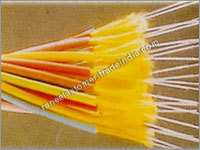
Rane Elastomer Processors Pioneering Indian company in the field of Silicon Rubber Product The products are specialized in manufacturing complete range of silicon Coated Insulation Cables which are capable of enduring temperature extreme It is High heat resistance Resistance to high temperature Available in Single Core Twin Core on Copper Conductors Its applications are Lighting Equipment Home Appliances Transformers other Electrical Equipment
Feature of Silicone Rubber Wires Cables
- High Heat Resistance
- Temp 80 C to 250 C 110F to 480 F
- No harmful toxic or physiological effects
- Chemically extremely stable and for use with many acids alkalis
- Resistance to Ozone Oxidation UV Corona discharge cosmic radiation
- Electrically insulating with dielectric strength 500 Vmil
- Low flammability and low smoke
- Range Available in single core double core on copper conductor
APPLICATIONS
- Lighting Equipments
- Home Appliances
- Transformer other electrical equipments
Outstanding Heat and Flame ResistanceOur silicone rubber cables can withstand high temperatures, making them ideal for electric heaters, ovens, and power plants. Their flame-retardant insulation provides additional safety and longevity, even in harsh operating conditions.
Versatile Customization OptionsAvailable in sizes ranging from 0.5 sq.mm to 240 sq.mm and thicknesses from 0.8 mm to 5.0 mm, these wires accommodate unique requirements. Choose from various colors and either single or multicore styles to perfectly match your project demands.
Reliable and Durable ConstructionManufactured with stranded copper cores and 100% synthetic silicone rubber, these cables resist ozone, UV, and most environmental factors. Their smooth surface finish and low water absorption further enhance their suitability for both indoor and outdoor installations.
FAQs of Silicone Rubber Wires Cables:
Q: How are silicone rubber wires and cables used in high temperature environments?
A: Silicone rubber wires and cables are commonly used in high temperature environments such as electric ovens, heaters, power plants, and industrial equipment due to their outstanding heat resistance. Their insulation withstands temperatures higher than standard cables, maintaining flexibility and safety.
Q: What makes silicone rubber cables suitable for both industrial and household applications?
A: These cables combine flexibility, durability, and strong electrical performance with flame retardant and UV resistant properties, making them ideal for a variety of uses, from industrial machinery to household appliances and lighting.
Q: When should I choose single core or multicore silicone rubber cables?
A: Single core cables are often chosen for straightforward connections or where space is limited, while multicore cables are better suited for complex circuits or applications needing multiple wire connections within one cable housing.
Q: Where can the cable sizes and diameters be customized?
A: Cable sizes, diameters, and even colors can be customized as per your specification, supporting a wide range of wiring needs for different environments and machinery. This ensures an optimal fit for unique projects.
Q: What is the process of manufacturing your silicone rubber wires?
A: Our silicone rubber wires are manufactured using stranded copper conductors for enhanced conductivity, sheathed in high-grade synthetic silicone rubber, resulting in flexible, glossy, and robust cables. Precise tolerances and quality checks ensure each product meets stringent standards.
Q: How does the low volatile matter content benefit these wires?
A: With volatile matter less than 1%, these cables maintain insulation integrity and performance at high temperatures. This minimizes risk of degradation and extends cable lifespan, ensuring reliability in demanding conditions.
Q: What advantages do these cables offer in terms of resistance and durability?
A: Aside from excellent heat resistance, these cables possess strong resistance to ozone, UV radiation, and water absorption (less than 0.5%), meaning they remain effective and durable in varying environmental conditions.


 Send Inquiry



 Send Inquiry


 Send Inquiry
 Send SMS
 Call Me Free


 English
 Spanish
 French
 German
 Italian
 Chinese (Simplified)
 Japanese
 Korean
 Arabic
 Portuguese